Caching faeces of other species: evidence of heterospecific coprophagy by Collared Pika (Ochotona collaris)?
DOI:
https://doi.org/10.22621/cfn.v139i1.3445Keywords:
Commensalism, coprophagia, caching, energetic reserves, foraging ecologyAbstract
Some species collect and consume the faeces of other species. However, evidence of such heterospecific coprophagy is rarely documented for wild mammals and has not been reported for Collared Pika (Ochotona collaris). We observed 14 Collared Pika haypiles (food caches) in northwestern Canada that contained faecal pellets of Hoary Marmot (Marmota caligata). Our observations were from two study areas ~700 km apart, suggesting that this behaviour may be widespread. We did not observe Collared Pikas consuming Hoary Marmot pellets, and they may collect them for other, unknown reasons, including as curios. Regardless, our observations are of value because they represent evidence of possible heterospecific coprophagy in Collared Pikas, which can potentially contribute to our understanding of their nutritional strategy.
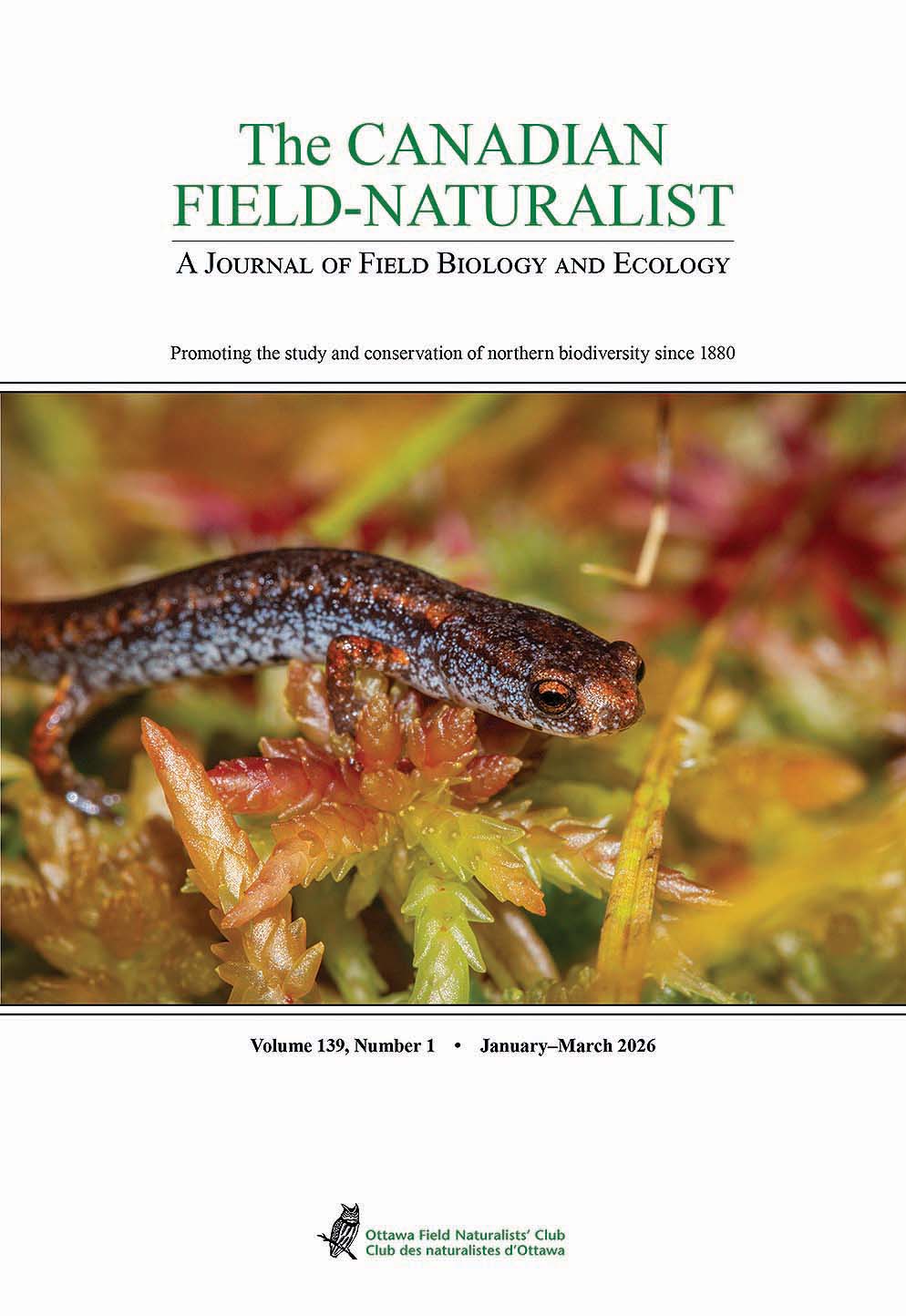
Downloads
Published
Issue
Section
License
Copyright for Canadian Field-Naturalist content is held by the Ottawa Field-Naturalists' Club, except for content published by employees of federal government departments, in which case the copyright is held by the Crown. In-copyright content available at the Biodiversity Heritage Library is available for re-use under a Creative Commons Attribution-NonCommercial-ShareAlike 4.0 (CC BY-NC-SA 4.0) licence. For usage of content at the BHL for purposes other than those allowed under this licence, contact us.
To request use of copyright material, please contact our editor, Dr. Dwayne Lepitzki: editor -at- canadianfieldnaturalist -dot- ca